
Whip Shading Tattoos: Why This Soft, Pain-Friendly Technique Is Taking Over
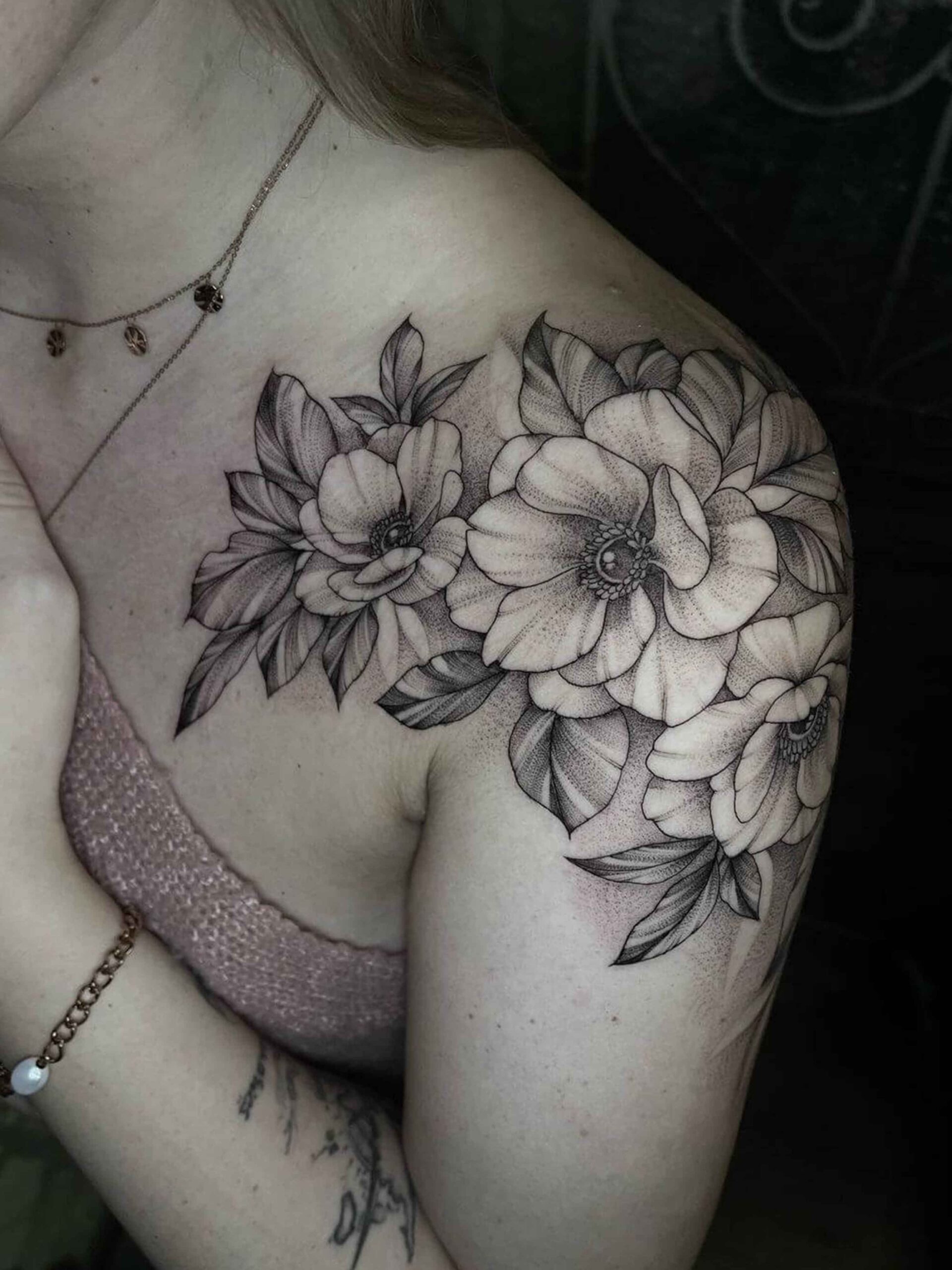
Whip shading creates soft, airy gradients that heal gently and age gracefully — and it's one of our signature techniques. Here's what whip shading actually is, why clients love how it feels, and the designs it suits best.
If you've been researching tattoo styles lately, you've probably run into the term whip shading — and if you found us by searching for it, you're not alone. It's one of the most searched techniques in tattooing right now, and it's a signature of our St. Petersburg studio. Here's everything clients ask us about it.
What Is Whip Shading?
Whip shading is a hand technique where the artist "whips" the needle out of the skin in a quick pendulum motion, depositing ink in a gradient — dense where the stroke begins, dissolving into a soft mist where it ends. The result is airy, textured shading that looks almost like pencil or charcoal drawing on skin.
Compare that to traditional packed shading, where ink is worked into the skin in solid, saturated layers. Whip shading trades density for softness — and that changes everything about how the tattoo feels, heals, and ages.
Does Whip Shading Hurt Less?
This is the question everyone asks, and the honest answer is: for most clients, yes, noticeably. Because the needle spends less time in the skin and doesn't saturate the same area repeatedly, whip shading tends to feel scratchier and lighter than packed black shading. Clients who sat through both in one session almost always tell us the whip-shaded sections were easier.
It's also gentler on the skin itself — less trauma means faster, calmer healing with less swelling and scabbing.
How Does Whip Shading Age?
Well-executed whip shading ages gracefully. Because the gradient is built from distinct ink deposits rather than solid saturation, it softens uniformly over time instead of blurring into patches. The drawing-like character of the piece stays intact for decades — it just mellows, like graphite art behind slightly warm glass.
Sun protection matters as much here as with any tattoo: SPF 50 on healed work is the best anti-aging product in existence.
What Designs Suit Whip Shading Best?
- Florals and botanicals — soft gradients give petals and leaves natural depth
- Portraits and figures — whip shading renders skin and fabric with a sketch-like quality
- Dark art and horror pieces — smoky, atmospheric shadows are whip shading's home turf
- Ornamental and blackwork accents — pairing crisp linework with misty whip-shaded fill is a signature look
- Snakes, insects, and animals — texture reads as scales, fur, and wing membrane beautifully
Whip Shading vs. Dotwork
They're cousins, not twins. Dotwork builds gradients from individual, deliberate dots — geometric, meditative, precise. Whip shading builds them from motion — organic, painterly, fast. Dotwork suits mandalas and sacred geometry; whip shading suits anything that should feel drawn by hand. Plenty of our pieces use both.
Whip Shading at Ministry of Ink
Whip shading isn't a trend we picked up last month — it's a technique our artists have refined over years, and it shows in how our pieces heal. If you want a tattoo with that soft, sketched, gallery-drawing feel, book a free consultation at 2700 Central Ave in St. Petersburg. Bring your reference and we'll show you healed examples of whip-shaded work, tell you how your design would translate, and give you a clear price before you commit.