
Whip Shading Tattoos
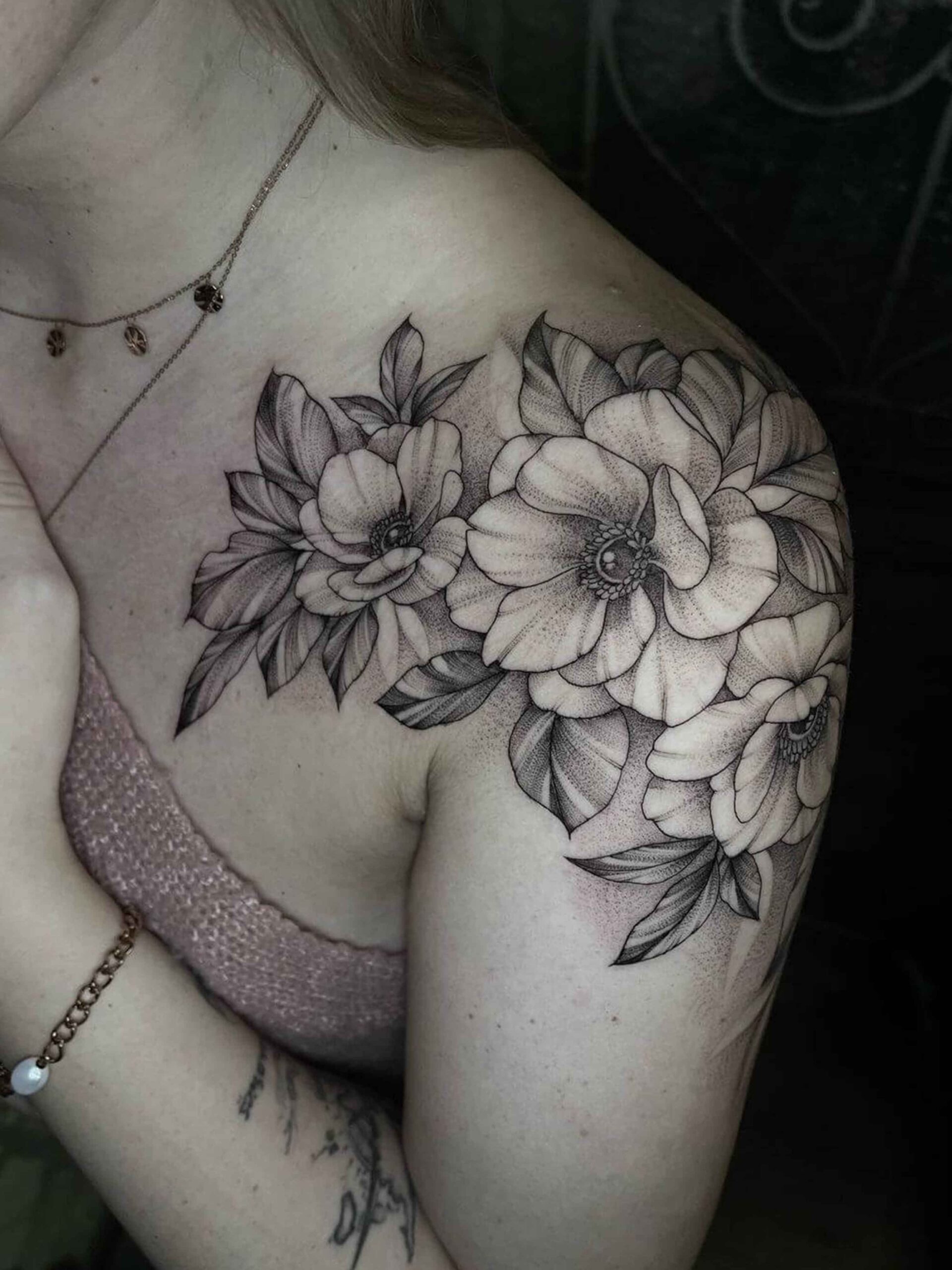
A specialized shading technique that creates a stippled, peppered gradient effect. Often paired with bold traditional or fineline work.
Whip Shading is a special technique used to give depth and volume to your tattoo design. Unlike Dotwork or Graphic styles, this technique doesn't stand out visibly — your tattoo can appear detailed without revealing the artist's technique. Depth, volume, and texture are achieved by applying colors in gradients from light to dark.
The art of Whip Shading lies in precisely delivering the color concentration under the skin. The swaying hand movement during tattooing is called "to whip" in English. There are no restrictions regarding motifs.
At Ministry of Ink, our artists have mastered this demanding technique to create tattoos with incredible depth and dimension. Whether you're looking for delicate florals, bold animal portraits, or intricate compositions, Whip Shading adds a level of refinement that elevates any design. Visit us in St. Petersburg, Florida, or reach out to the Tampa Bay area — we're ready to bring your vision to life.
COMMON QUESTIONS
What is whip shading in tattooing?
Whip shading is a shading technique where the artist uses a quick, whip-like flick of the hand as the needle exits the skin. The motion deposits less ink at the end of each stroke, creating a soft, peppered gradient from dark to light. It gives tattoos depth and texture with a lighter, airier look than solid packed shading.
Does whip shading hurt less than regular shading?
Many clients find whip shading gentler than packed or solid shading because the needle spends less time in any one spot and deposits less ink per pass. Pain tolerance varies from person to person, but whip-shaded areas typically heal faster and with less trauma to the skin.
How does whip shading age over time?
Whip shading ages well when applied by an experienced artist. Because the ink is deposited in a fine stipple rather than dense saturation, the gradient softens gracefully instead of blurring into a solid block. Good aftercare and sun protection keep the peppered texture crisp for years.
What's the difference between whip shading and dotwork?
Dotwork builds shading from individually placed dots, creating a deliberate, visible stipple pattern. Whip shading is done with a sweeping motion, so the texture is softer and reads more like an airbrushed gradient. Whip shading is often combined with fineline, lettering, and black & grey work for a subtle finish.